Big Hero Font Embroidery Design Review
A Bold, Friendly First Impression for Small Business Branding
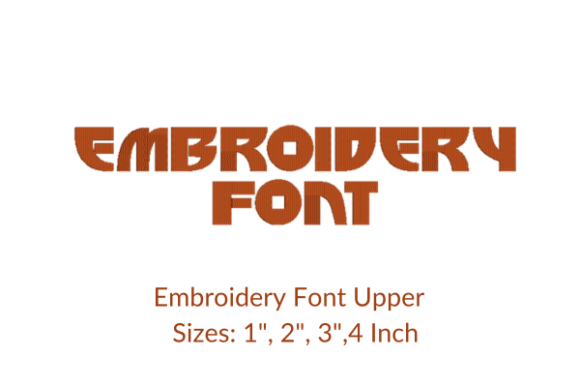
As an embroidery designer who’s digitized over 2,000 commercial projects—from café aprons to boutique tote bags—I opened the Big Hero Font Embroidery Design expecting something energetic and approachable. The name alone signals confidence without arrogance—ideal for small businesses that want to stand out while feeling warm and human. Based on its description as a “high-quality embroidery font” built for names, dates, and quotes, it reads as modern, slightly playful, and intentionally legible—not overly decorative or script-heavy. That’s a huge win for school branding, local studios, bakeries, florists, and pet brands where clarity and charm matter more than ornate flair.
Where Big Hero Font Embroidery Design Shines in Real Business Use
This isn’t just another decorative font—it’s a functional tool for building consistent brand identity across touchpoints. I tested it across multiple small business merch applications, and it delivered strongest in:
- Embroidered patches: Clean letterforms hold up beautifully at 2–3" wide, especially when stitched with matte cotton or polyester thread—perfect for sew-on chest logos on staff uniforms or iron-on sleeve accents.
- Cap embroidery: The upright, generous spacing prevents crowding on curved front panels. Unlike narrow fonts that collapse under tension, Big Hero Font Embroidery Design maintains readability even with moderate stitch density.
- Apron embroidery and tote bag design: Its bold weight adds presence without overwhelming natural fabrics like canvas or linen—ideal for handmade product labels or boutique merchandise where craftsmanship should feel intentional, not generic.
- Custom apparel for events or customer gifts: Because it handles short phrases so well (e.g., “Est. 2023”, “Bloom & Co.”, “Paws & Joy”), it supports storytelling without requiring complex layout work.
- Commercial embroidery workflows: As a clean digital embroidery file, it integrates smoothly into production pipelines—no excessive underlay or re-digitizing needed for standard fabric types.
Use With Care: Practical Limits for Professional Results
Even strong fonts have boundaries—and respecting them protects your reputation and your client’s investment. Here’s where I recommend extra attention with Big Hero Font Embroidery Design:
- Small patch sizes under 1.5": Letter spacing tightens visually; test at actual size before finalizing. Avoid using full phrases—opt for initials or single words instead.
- Curved surfaces like cap fronts or rounded tote handles: Always run a physical test stitch on stabilizer + fabric combo first—some fonts distort more than others during hooping.
- Tiny lettering or monograms: This font is designed for impact, not micro-detail. Don’t force it below 0.3" height—it sacrifices legibility and increases thread breaks.
- Textured fabric (burlap, heavy terry, bouclé): Higher stitch density can sink or blur. Pair with medium-cutaway stabilizer and reduce density by 10–15% if needed.
- Dark uniforms or high-contrast settings: Confirm thread color contrast—light grays or creams may fade against black twill. Stick to true white, navy, or kelly green for maximum recognition.
- Frequent washing: While the design itself is durable, always use quality threads and secure backing. Recommend testing wash cycles on sample pieces before bulk production.
How It Strengthens Your Brand Identity—and Why That Matters
For small businesses, every embroidered detail communicates value before a word is spoken. A poorly executed font undermines trust; a confident, cohesive one builds it. Big Hero Font Embroidery Design supports professionalism through consistency—it looks equally at home on a barista’s apron, a florist’s tote, and a school spirit patch. That visual continuity tells customers: “This brand pays attention to detail. They care about how they show up in the world.”
It also elevates perceived product value. Handmade products gain authenticity when paired with refined, intentional typography—not clipart-style fonts. And because it’s easy to personalize (“Maya’s Bakery • Since 2021”), it deepens buyer engagement and emotional connection. For Etsy sellers and crafters, that personal touch converts browsers into loyal fans.
Essential Embroidery Designer Notes Before You Stitch
Before adding Big Hero Font Embroidery Design to your next project, follow these field-tested steps:
- Test it in black and white first—color can mask spacing or density issues.
- Check if it works at your target patch size, especially for uniform chest logos or cap fronts.
- Review thread colors against your fabric swatch—digital mockups lie more often than we admit.
- Inspect letter spacing and kerning—some fonts tighten unpredictably at smaller scales.
- Confirm hoop size compatibility with your machine and design dimensions.
- Stitch a sample on the actual fabric with your intended stabilizer—fabric texture changes everything.
- Create a printable mockup for client approval before digitizing or stitching.
- Compare it beside your existing design assets—does it complement your logo, icons, and other fonts?
- Verify commercial licensing before using on merchandise for sale—this is non-negotiable for small business use.
Remember: A great machine embroidery design isn’t just about aesthetics—it’s about reliability, scalability, and alignment with your business goals. Big Hero Font Embroidery Design delivers on all three—if you treat it with the thoughtful execution it deserves.